

How to Choose the Right Water Hose Adapter Size and Type
Quick Summary
A water hose adapter is a small fitting that joins two connections that do not match, such as a garden hose thread and a pipe thread. To choose one, measure both ends for thread standard, size and male or female gender before you buy. Garden hose thread (GHT) suits outdoor hoses and faucets, while NPT suits plumbing connections.
- Measure the thread, not just the hose bore, before ordering an adapter.
- Garden hose thread is typically 3/4-inch with 11-1/2 threads per inch.
- Garden hose thread and NPT pipe thread are different standards and will not seal together.
- Record whether each end is male or female before you shop.
- Forcing a fitting that binds usually means the thread is wrong and can damage both parts.
Table of Contents
- What a Water Hose Adapter Does and When You Need One
- Water Hose Adapter Size: How to Measure Correctly
- Water Hose Adapter Female to Male: Which End Do You Need
- Water Hose Adapter for Kitchen Sink: Fit, Limits and Alternatives
- Garden Hose Quick Connector Fittings and Other Adapter Types
- Stopping Leaks and Choosing Materials That Hold Pressure
- Order the Right Water Hose Adapter From 4J Total Supply
- Frequently Asked Questions
What a Water Hose Adapter Does and When You Need One
Last Updated: November 17, 2026
A water hose adapter is a small fitting that joins two connections that do not match. Most garden hoses use a 3/4-inch garden hose thread, but many spigots, pipes and tools use different threads or sizes. An adapter bridges that gap so water flows without leaks. Landscaping crews, pressure washing operators and farm managers reach for these fittings often, especially when a connection fails at the worst possible moment.
You usually need an adapter when a tool will not thread onto your hose, when a spigot is a different size from your hose, or when you want to run one hose into another. Identify both ends before you buy: note whether each connection is male or female, and whether it is a hose thread or a pipe thread.
Water Hose Adapter Size: How to Measure Correctly
Measuring correctly prevents the most common ordering mistake. The goal is to identify two things on each connection: the thread standard and the nominal size. Do not assume the hose bore tells you the thread size.
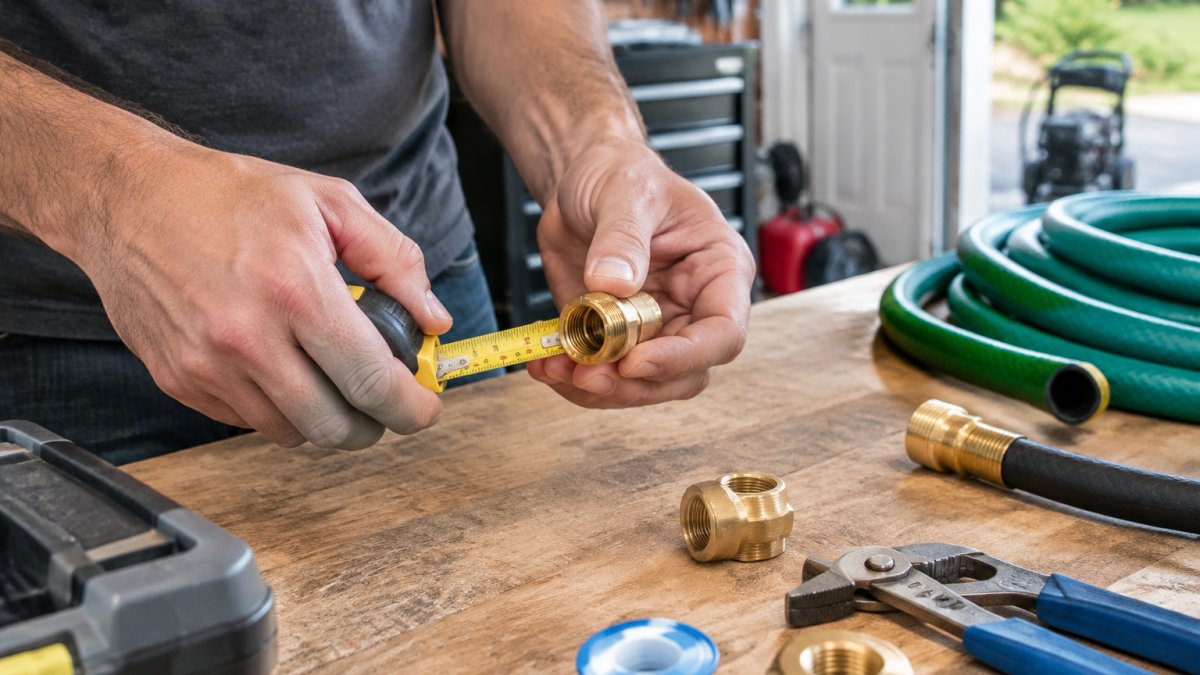
Step-by-step measurement
- Remove any existing adapter, nozzle, or quick-connect fitting so you are measuring the bare threads.
- Measure the outside diameter of the male thread across the widest point, or the inside diameter of the female thread across the thread crests. A caliper gives the cleanest reading; a tape measure works if you keep it square to the fitting.
- Measure in inches and compare against known thread dimensions rather than guessing from the hose size.
- Count the threads per inch if the diameter is ambiguous. Thread pitch is often the deciding factor between two fittings that look similar.
- Write down male or female for each end before you shop. A fitting that is correct in diameter but wrong in gender will not connect.
Hose diameter versus thread size
Hose diameter and thread size are not the same measurement. A 3/4-inch hose can have a 3/4-inch garden hose thread, but a 1/2-inch pipe thread (MPT or FPT) is a different standard entirely. The hose bore describes the water path; the thread describes the connection. Measure the thread, not just the hose bore, before you order.
Common thread standards used in the US
The garden hose thread (GHT) is the standard for most outdoor hoses and faucets, typically 3/4-inch GHT with 11-1/2 threads per inch. National pipe thread (NPT) is tapered and used for plumbing; common small sizes are 1/2-inch NPT and 3/4-inch NPT. Use GHT for garden work and NPT for pipe connections, and confirm which one your equipment uses before buying. A fitting labeled 3/4-inch GHT will not seal on a 3/4-inch NPT pipe because the thread forms and pitch differ.
Compatibility checks before you buy
Match the thread standard first, then the size, then the gender. If one end is GHT and the other is NPT, you need a adapter that explicitly converts between them rather than a same-thread coupler. Check the listing for both thread callouts, for example "3/4-inch GHT female x 1/2-inch NPT male." If a listing gives only a hose size, treat it as incomplete until you confirm the thread.
Watch out: a fitting that threads on a few turns and then binds is usually the wrong thread standard, not a tight fit, forcing it will damage the threads on both parts.
The table below summarises the common thread standards and what each one is used for.
| Thread standard | Typical use | Key difference |
|---|---|---|
| Garden hose thread (GHT) | Outdoor hoses and faucets | Typically 3/4-inch with 11-1/2 threads per inch |
| National pipe thread (NPT) | Plumbing connections | Tapered thread form |
| 1/2-inch NPT | Small pipe connections | Common small pipe size |
| 3/4-inch NPT | Larger pipe connections | Common larger pipe size |
Water Hose Adapter Female to Male: Which End Do You Need
A female fitting has an internal thread, while a male fitting has an external thread. A female-to-male adapter connects two parts that have opposite threads. If your hose end is female and your tool has a male connection, you need a female-to-male adapter.
A quick check: if the piece you are attaching threads inside the adapter, the adapter needs a male end on that side. If it threads over the outside, you need a female end. Mix this up and the fitting simply will not connect.
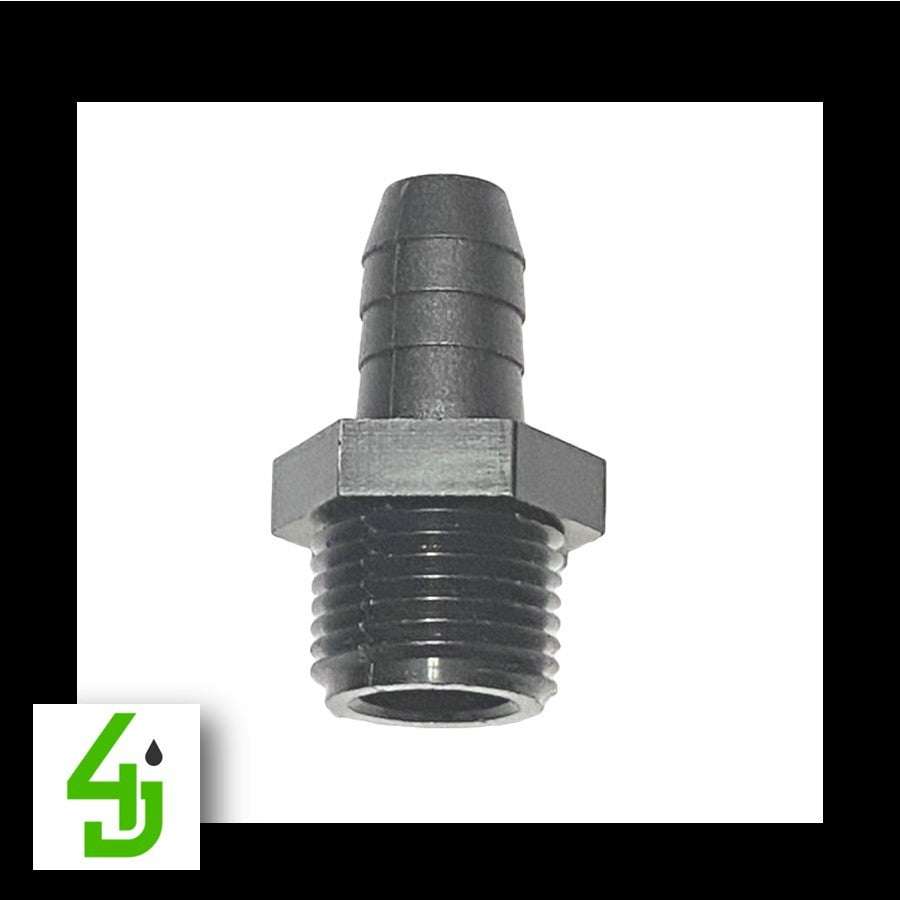
For a male pipe-thread-to-barb connection, the Poly Hose Barb 1/2 inch MPT x 1/2 Barb - Short is available for $0.95 at short poly hose barb adapter. Its barb is short, about 1 inch; for a longer barb, the listing notes HB050 is available.
Water Hose Adapter for Kitchen Sink: Fit, Limits and Alternatives
Kitchen sink faucets rarely use standard garden hose threads. Many use aerator-style threads or proprietary connections, so a garden hose adapter often does not fit. The practical approach is to identify the faucet thread first, then choose a purpose-built connector rather than forcing a garden fitting.
Identify the faucet thread
Most kitchen faucets end in a threaded aerator. Remove the aerator and measure the male thread on the faucet or the female thread inside the aerator. Common aerator threads are much smaller than garden hose thread, and the two are not interchangeable. If the faucet has a pull-down spray head or a proprietary quick-connect, there may be no standard thread to adapt at all.
When a garden hose adapter is unsuitable
A garden hose adapter is the wrong tool when the faucet thread is an aerator size, when the faucet uses a proprietary connector, or when the fitting would put side load on a delicate faucet spout. Do not force a fitting that binds or cross-threads. Indoor supply lines also run at different pressure and temperature than an outdoor spigot, so a fitting rated only for garden use may not suit indoor plumbing.
Alternatives that work
- Aerator-to-garden-hose adapters: purpose-built fittings that replace the aerator and present a male or female garden hose thread. These are the correct choice when the faucet has a standard aerator thread.
- Sink-to-hose connector kits: assemblies designed for utility sinks and laundry tubs, often with a rubber boot and clamp instead of a threaded connection.
- Utility faucets: if the goal is regular hose use indoors, replacing the faucet with a utility model that has a garden hose thread avoids the adapter problem entirely.
- Portable washer and appliance connectors: use the connector specified by the appliance maker rather than a garden fitting, since appliance inlets often use hose thread but require a specific washer and pressure rating.
Material and pressure notes for indoor use
Always use the washer supplied with the adapter, and hand-tighten plus a snug quarter turn rather than wrenching hard.
Garden Hose Quick Connector Fittings and Other Adapter Types
Quick connector fittings let you attach and detach a hose without threading. They save time when switching between tools, which matters for crews changing equipment several times a day.
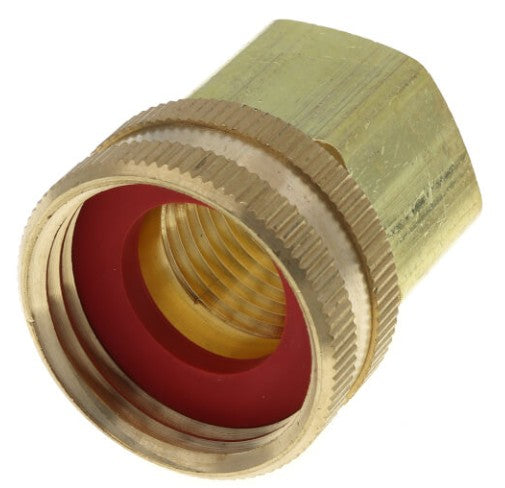
For a female garden hose end that needs to connect to a female pipe thread, the 3/4" Female Hose x 1/2" Female Pipe Brass Garden Hose Swivel is listed at $6.99 at brass garden hose swivel.
Stopping Leaks and Choosing Materials That Hold Pressure
Most leaks come from a worn washer, an unseated thread, or a fitting that is the wrong size. Tighten by hand first, then add a snug turn with a wrench. Overtightening can crack plastic fittings.
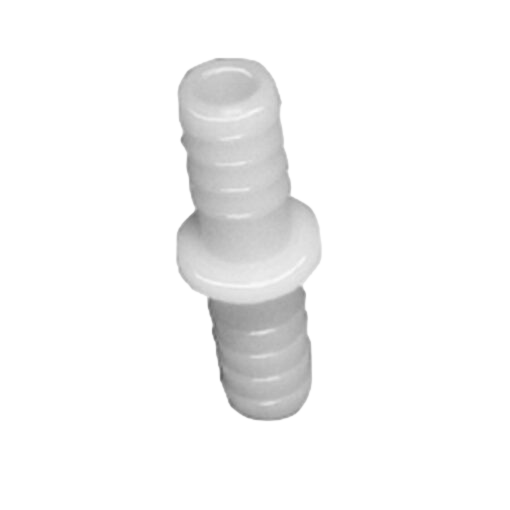
The TerreMax Nylon Hose Mender 5/8 x 5/8 is $1.00 and the TerreMax Nylon Hose Mender 3/4 x 3/4 is $1.11, both listed for nylon hose menders and a 3/4 size option. Match the mender size to your hose exactly, since an undersized mender will leak under pressure.
Order the Right Water Hose Adapter From 4J Total Supply
Choosing the right adapter comes down to measuring both ends, matching male and female threads, and confirming the thread standard. Once you have those details, the catalog listings give you the size and price before you buy.
Our team can help you find the exact part when the connection is unclear. Check out today and get the adapter that fits your setup the first time.
Frequently Asked Questions
What is a hose adapter called?
A hose adapter is also called a hose fitting, hose connector or hose coupling. It joins two parts that do not match, such as a garden hose and a faucet, or two hoses with different thread types. Adapters come in brass, nylon and polypropylene, and are sold by thread size and end type. When shopping, search for the thread size and whether each end is male or female, since those details matter more than the name.
How do I know what size water hose adapter I need?
Measure the thread on the fitting you need to connect to, not the hose's inside diameter. Garden hoses usually use 3/4-inch Garden Hose Thread (GHT), while many faucets and pipes use 1/2-inch or 3/4-inch National Pipe Thread (NPT). Check whether the thread is male or female, then match the size on the other end. Our Poly Hose Barb 1/2 inch MPT x 1/2 Barb is one example of a fitting sold by thread and barb size.
What is the difference between male and female hose adapters?
A male adapter has external threads, like a screw, and a female adapter has internal threads that receive it. A female-to-male adapter lets you join two components where one end is male and the other female. Male-to-male and female-to-female adapters join two of the same type and are used less often. If both ends of your hose or faucet are female, you need a fitting with male ends on both sides, or a coupling designed for that connection.
Can I connect a garden hose to a kitchen sink?
Sometimes, but a standard garden hose adapter is not always a good fit for a kitchen sink. Kitchen faucets usually have smaller threads and different outlet designs than outdoor spigots, so you may need a specific faucet adapter. Check your faucet's thread size before buying. A fitting such as the TerreMax Nylon Hose Mender 3/4 x 3/4 repairs a hose but is not designed to attach a hose to a sink, so confirm compatibility before connecting.
