

How to Use OEM Replacement Parts the Right Way
Last Updated: November 12, 2026
Quick Summary
OEM replacement parts are components manufactured by or for the original equipment manufacturer to the same specifications used on the assembly line, so they fit factory tolerances and perform to the original fuel and airflow curves. Using genuine parts protects system-integrated components like fuel delivery, ignition, and braking, and keeps your manufacturer warranty valid. The upfront cost is higher, but downtime, repeat labor, and secondary damage make cheap copies more expensive over the life of the machine.
- Sort parts into four buckets: safety-critical, wear items, cosmetic, and hard-to-find for discontinued machines.
- Match the manufacturer part number to your exact engine model and spec, then verify it against a second source.
- Under an active manufacturer warranty, use genuine parts and keep the invoice and packaging for a clean paper trail.
- Keep one of each scheduled wear item on the shelf and order its replacement the same week it goes on.
- A California regulation requires non-original crash parts specified by insurers to be at least equal to OEM in kind, quality, safety, fit, and performance.
Table of Contents
- What Are OEM Parts and Why They Matter
- OEM vs Aftermarket Parts: The Real Tradeoffs
- How to Identify the Correct OEM Part for Your Equipment
- Fit, Performance, and Safety: What OEM Parts Get Right
- OEM Parts Warranty Considerations Before You Buy
- Total Cost of Ownership: Why Cheap Parts Cost More
- How to Source OEM Parts for Less Downtime
- Frequently Asked Questions
What Are OEM Parts and Why They Matter
OEM replacement parts are components manufactured by or for the original equipment manufacturer to the same specifications used on the assembly line, which is why sourcing true OEM replacement parts matters. They are built to the drawing the machine was designed around, not to a drawing someone reverse-engineered later.
At 4J Total Supply, we field calls every week from landscaping crews, farm managers, and pressure washing operators who tried a cheaper route first and are now paying for it twice. A genuine OEM carburetor listing shows what that looks like in practice: a Walbro WTA-35-1 built for Echo PB-580H and PB-550T backpack blowers, stamped with the manufacturer part number so you can verify it before install.
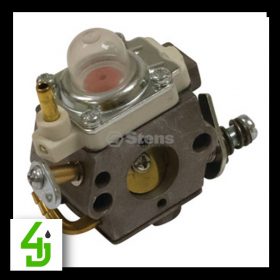
That stamp matters. OEM parts are identified by a manufacturer part number and are built to the manufacturer's specifications.
Three things separate a genuine part from a lookalike:
- Tooling ownership. The OEM controls the molds and dies. Copies are measured off finished parts, and measurement error compounds.
- Material spec. Housings, seals, and diaphragms are made to a documented compound. Substitutes often are not.
- Traceability. A part number lets you confirm fitment against the engine model and spec before you spend a dime.
Fitment is not the same as "looks similar."
OEM vs Aftermarket Parts: The Real Tradeoffs
Aftermarket parts are not automatically bad. The tradeoff depends on what the part does, what a failure costs you, and how long you plan to keep the machine. A cosmetic cover and a fuel diaphragm are not the same risk category.
A California regulation governing crash parts specified by insurers requires non-original parts to be at least equal to OEM in kind, quality, safety, fit, and performance, as documented in California Code of Regulations Title 10, Section 2695.8.
Here is how the two compare on the criteria that actually decide it:
| Factor | OEM Parts | Aftermarket Parts |
|---|---|---|
| Fitment | Built to factory drawing | Copied or adapted |
| Material spec | Documented and controlled | Varies by maker |
| Warranty path | Through manufacturer channels | Through the seller |
| Upfront cost | Higher | Lower |
| Failure risk on critical parts | Lower | Higher and less predictable |
| Availability for older machines | Can be limited | Often broader |
The Insurance Risk Management Institute's comparison of OEM and aftermarket parts notes that the two sides genuinely disagree on whether non-OEM parts match OEM quality, while aftermarket makers argue their parts deliver meaningful savings. Both claims can be true at once. The useful question is which parts on which machines justify the premium.
A decision framework by part type
Sort every part into one of four buckets before you compare prices.
- Safety-critical and system-integrated components. Brakes, steering, suspension, fuel delivery, ignition, and high-pressure fittings were validated as a system, and a copy has no test behind it. Buy genuine. The downside is not a rough idle; it is injury or a secondary failure that takes out surrounding components.
- Wear items on a maintenance schedule. Filters, belts, spark plugs, carburetor kits, and seals. Genuine parts are the default because the spec is documented and the cost difference is small relative to the labor. A reputable aftermarket option can be reasonable if it names the OEM cross-reference and the maker is known for that category.
- Cosmetic and non-structural body parts. Panels, guards, and covers. A failure is an inconvenience, not a hazard, so aftermarket is often sensible here, especially on older equipment.
- Hard-to-find parts for discontinued machines. Availability can override brand loyalty. When the OEM number is discontinued, a documented aftermarket cross-reference from a supplier who confirms fitment beats a machine sitting idle.
A decision framework by vehicle age and intent
- Under the manufacturer warranty. Use genuine parts. The warranty terms usually require it, and a denied claim dwarfs the savings.
- Out of warranty, plan to keep the machine. Genuine on critical systems; aftermarket acceptable on cosmetic and low-risk wear items. Total cost of ownership favors genuine on anything that can cause a secondary failure.
- Out of warranty, plan to sell or trade. Match the part to the value of the machine. A documented aftermarket part on a high-hour unit is defensible; misrepresenting it as genuine is not.
- Fleet or commercial use. Downtime is the dominant cost. Standardize on genuine parts for anything that stops a crew, and stock the wear items so timing is your choice, not the failure's.
Our rule of thumb: on anything that touches fuel delivery, ignition, braking, steering, or a rotating assembly, buy genuine. On a belt guard or cosmetic panel, the calculus changes.
How to Identify the Correct OEM Part for Your Equipment
Start with the stamped number on the old part, not the listing photo. Manufacturers stamp or cast part numbers on carburetors, coils, and pump housings for exactly this reason.
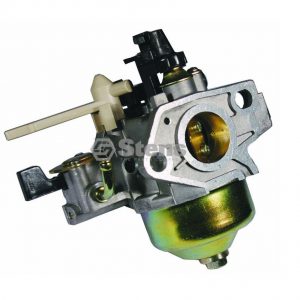
A Honda GX160 carburetor listing with OEM and replacement numbers demonstrates the pattern.
Work through this checklist before you order:
- Read the model and spec number off the engine plate, not the equipment badge
- Photograph the old part's stamped number in good light
- Cross-reference the OEM number against the replacement number
- Confirm the listing names your specific model, not a family of models
- Check the spec suffix, since the same engine family often uses different parts by spec
- Ask before ordering if anything is ambiguous
That last item saves more money than any discount code. A common mistake is ordering by engine family alone. Honda's GX series spans displacements that share a name but not a carburetor.
Fit, Performance, and Safety: What OEM Parts Get Right
Fitment is the visible one. A part that bolts up but sits off-spec can change how linkages and mating surfaces behave in operation.
Performance is the quieter one.
Safety matters most on critical components. A failed fuel fitting or a seal that gives way under pressure can create real risk, especially on pressure washing and spraying equipment.
OEM parts are designed to work as part of a system. A substitute may not have been developed or tested against the same components.
OEM Parts Warranty Considerations Before You Buy
Warranty coverage is the most misunderstood part of this decision. The common shorthand, that any non-OEM part automatically voids the whole warranty, is not accurate (the FTC).
Manufacturer warranties cover defects in materials and workmanship for the period specified in their terms. Read the specific terms for parts requirements, and consult the warranty documentation or a qualified advisor on how it applies to your situation.
Read three things before you buy:
- The coverage period, stated in the manufacturer's own documentation, not the seller's summary.
- The parts requirement, which usually specifies genuine components for warranty validity on covered repairs.
- The defect definition, which covers manufacturing faults, not wear, misuse, or installation error.
How warranty effects actually break down by situation
- Repair under an active manufacturer warranty. Use genuine parts. The terms usually require it, and a denied claim is expensive. Keep the invoice and packaging so the paper trail is clean.
- Repair after the warranty expires. The manufacturer warranty is no longer in play. What matters is the part maker's own warranty and the seller's return policy. Read both before ordering.
- Collision or insurance-paid repair. The insurer's policy and the repair estimate drive parts selection, and state rules can affect what non-OEM parts are permitted. Ask the shop which parts are specified and why before work begins.
- Extended service contract or third-party warranty. These are contracts, not manufacturer warranties, and their parts requirements vary widely. Read the contract language rather than assuming it mirrors the manufacturer's terms.
- Self-installed parts. Installation error is generally excluded from coverage. A part that fails because it was installed incorrectly is a different claim than a part that failed on its own.
A Kawasaki engine maintenance kit listing shows how OEM-spec parts arrive packaged and numbered, which makes the paper trail for a warranty claim straightforward. Keep the packaging and the invoice. A claim without a part number is a hard conversation.
Watch out: buying a "compatible" part to save money, then filing a warranty claim when the engine fails, is the most common way operators end up in a denied-claim dispute, even when the part was not the cause.
Total Cost of Ownership: Why Cheap Parts Cost More
Cheap parts cost more over the life of the machine, and the math is not close once you count downtime.
A landscaping crew losing a machine for a day loses revenue, not just time. A pressure washing operator with a down pump misses scheduled jobs. Those costs dwarf the difference between a genuine part and a copy.
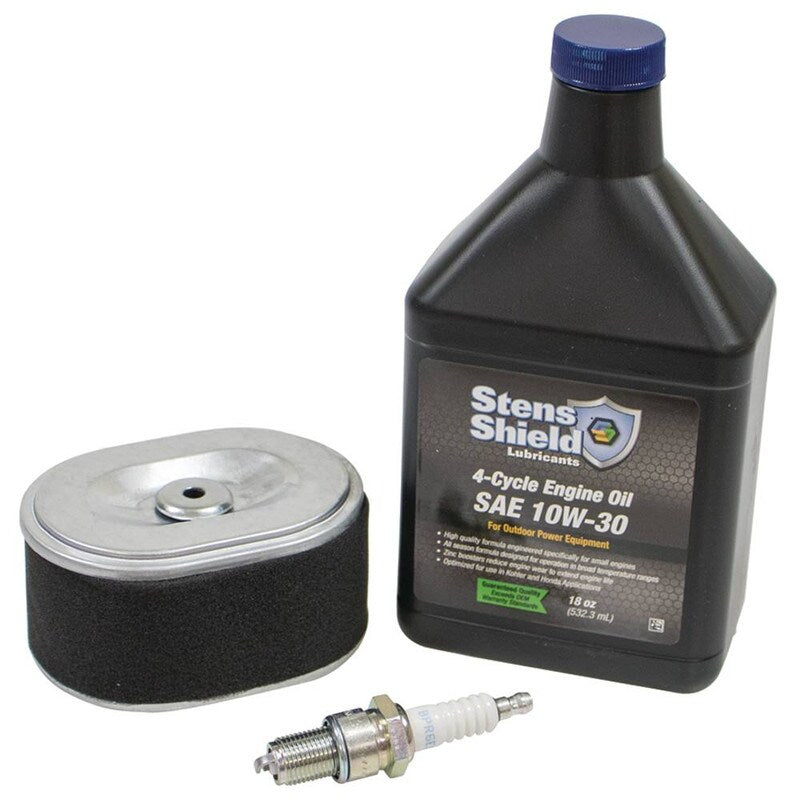
Consider what a Stens engine maintenance kit for Briggs & Stratton represents: a planned purchase of the parts that wear on a schedule. Buying maintenance kits ahead of failure is the cheapest form of parts buying there is, because you choose the timing instead of the failure choosing it for you.
Three costs people forget:
- Repeat labor. Replacing the same component twice costs more in hours than the part ever did.
- Secondary damage. A failed seal that takes out a bearing turns a small job into a rebuild.
- Lost jobs. The revenue you did not earn while the machine sat is the largest line item, and it never appears on an invoice.
Buy the genuine part. Schedule the maintenance. The arithmetic favors you.
How to Source OEM Parts for Less Downtime
Downtime is the enemy here, not price. A part that arrives two days late at a lower price is a worse deal than the one that arrives tomorrow.
Build a short list of the parts your machines consume, and keep one of each on the shelf. Belts, filters, carburetor kits, seals.
When you do order, order by number.
And ask. Confirming fitment against your model and spec before ordering helps avoid a wrong-part return.
Frequently Asked Questions
Is it better to use OEM parts or aftermarket parts?
It depends on the part and the machine. OEM replacement parts are built to the original equipment manufacturer's specifications, so fitment, tolerances, and materials match what the machine was designed around. Aftermarket parts can work well and often cost less, but quality varies by maker. For safety-critical components like suspension parts or fuel system pieces, OEM is the safer default. For cosmetic or low-stress items, a quality aftermarket part is a reasonable choice.
How do I know a part is genuinely OEM and not a counterfeit?
Check three things. First, confirm the part number stamped on the component matches the number in the manufacturer's parts diagram for your exact model and spec. Second, buy from an authorized dealer or a supplier who lists the OEM part number the part replaces. Third, inspect the packaging and casting marks; counterfeit parts often have blurry labels, mismatched numbers, or rough finishes. If the price is far below every other source, treat that as a warning sign.
Can using aftermarket parts affect my warranty?
It can. Many manufacturer warranties state that damage caused by non-OEM parts is not covered, though the warranty itself usually is not voided outright. Keep your receipts and note the part number installed. If a failure traces back to a cheap aftermarket component, you may end up paying for the repair yourself. When a machine is still under warranty, OEM parts remove that argument entirely.
When should I choose OEM replacement parts over aftermarket?
Choose OEM when the part affects safety, fuel delivery, electrical systems, or anything with tight tolerances. Also choose OEM on equipment still under warranty, on machines you depend on daily, and on older models where aftermarket fitment is hit or miss. On high-wear consumables like filters and belts, a quality aftermarket equivalent is often fine if the part number cross-references correctly.
