

Return Policy for Industrial Machinery Parts: What to Know
Table of Contents
- Return Policy for Industrial Machinery Parts: The Basics
- Eligibility: Return Window, Condition, and Proof of Purchase
- How to Get an Equipment Parts Return Authorization
- Nonreturnable Industrial Parts and Special-Order Items
- Industrial Parts Restocking Fee: What Gets Deducted
- Equipment Parts Return Shipping: Who Pays
- Defective, Damaged, or Incorrect Parts: Returns vs. Warranty Claims
- Refund Timelines and Refund Methods
- Frequently Asked Questions
Last Updated: October 19, 2026
Return Policy for Industrial Machinery Parts: The Basics
A return policy for industrial machinery parts governs whether you can send a part back, how long you have, and what you get back.
That panic is avoidable, most rejected returns fail on paperwork and timing, not the part itself.
Below, we walk through the full process, from the return window to the refund, and show where warranty claims split off from standard returns, mixing those up wastes weeks.
Eligibility: Return Window, Condition, and Proof of Purchase
Three things decide almost every return: the deadline, the part's condition, and proof of purchase. Miss one and the return gets denied.
Deadlines From Purchase or Delivery
Return windows count days from either the purchase date or the delivery date, a distinction that matters for freight shipments sitting on a dock for a week.
- Purchase date windows start the moment you pay.
- Delivery date windows start when the carrier hands over the part.
- Freight and oversized items often get a shorter window because handling costs are higher.
Check the delivery date on your packing slip first. That is the date most return policies actually use.
Unused, Uninstalled, and Resalable Condition
A part must come back in resalable condition:
- New condition, with no wear or grease
- Uninstalled and never mounted on a machine
- Unaltered, with no drilled holes, cut threads, or modified fittings
A common mistake is test-fitting a pump or seal before returning it, once mounted, many suppliers treat a part as used.
Keep proof of purchase ready: original invoice, order number, part number, and serial number if applicable. Without these, a return stalls at the first step.
How to Get an Equipment Parts Return Authorization
An equipment parts return authorization, an RMA (Return Merchandise Authorization), is the approval number a supplier issues before you ship anything back. No authorization, no refund. It trips up the most buyers, and preparation here saves the most time.
The Step-by-Step Return Workflow
The sequence that works:
- Pull your paperwork. Locate the original invoice, order number, part number, and serial number. For business accounts, have the account number ready.
- Contact the supplier in writing. Use the return request form or email rather than a phone call alone. A written record of the request date matters if the return window is tight.
- State the reason clearly. Wrong part, damaged in transit, defective out of the box, or ordered in error, the reason determines who pays freight and whether a restocking fee applies.
- Attach photos. Show the part, part number label, packaging, and any damage. Photograph before packing, once boxed, you lose your best evidence.
- Wait for the authorization number in writing. Do not ship before you have it. An verbal 'go ahead' is not an authorization.
- Write the authorization number on the outside of the box. Returns that arrive without it get lost in receiving and may be refused.
- Ship using the method the supplier specifies. Use a prepaid label if issued; if you pay freight, get the carrier and service level in writing so the shipment can be traced.
- Save the tracking number. It is your proof of delivery if the credit is disputed.
- Track the inspection and refund. The refund clock starts when the part arrives at the supplier, not when you ship it.
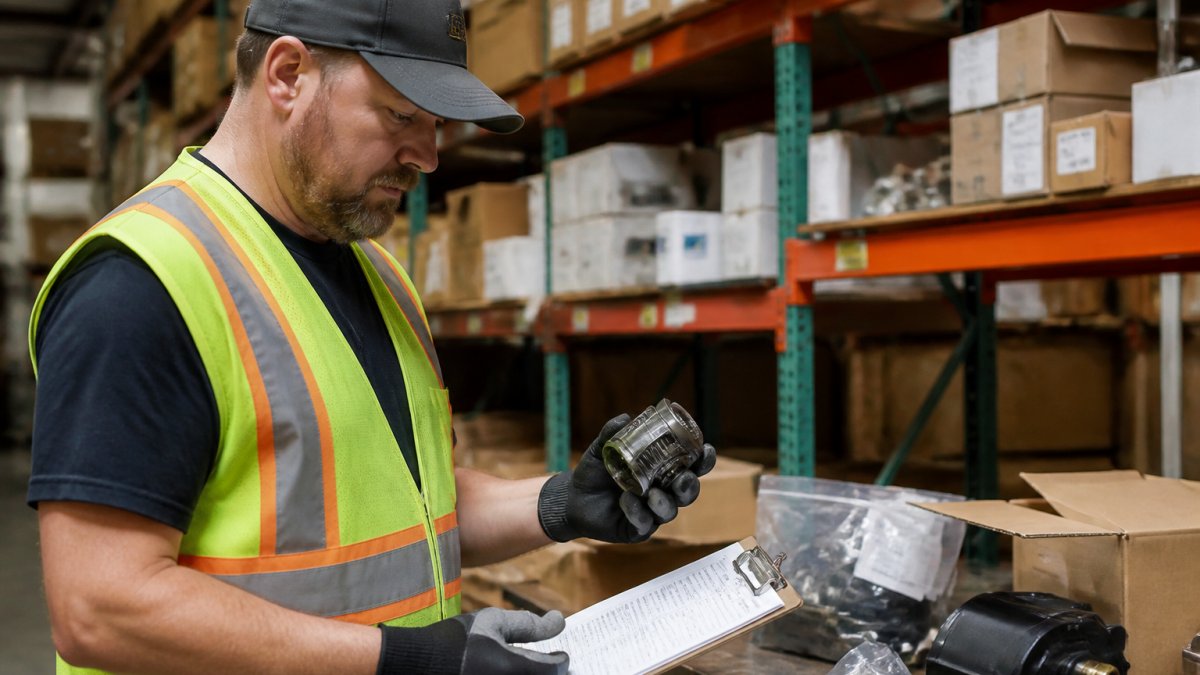
Return Documentation Checklist
Run this checklist before every return, a missing item is the most common reason a return stalls at receiving.
- Original invoice and order number located
- Part number and serial number recorded
- Photos of the part, part number label, and packaging taken
Freight, Oversized, and Hazardous-Material Returns
Industrial parts are often heavy, bulky, or regulated, and those returns don't move like a boxed seal kit:
- Freight and oversized items usually require the supplier to arrange pickup or issue a freight quote. Confirm the cost in writing before the truck is dispatched; return freight on a heavy item can exceed the value of a small part.
- Liftgate and dock access matter. If your site has no dock, tell the supplier so the pickup is booked with a liftgate. A failed pickup can trigger a second freight charge.
- Hazardous materials, some fluids, batteries, and pressurized components, cannot ship through standard parcel carriers. Ask the supplier for the required paperwork and carrier before you pack.
Return or Warranty Claim? Route It Correctly
Before requesting an authorization, decide which path applies. Routing a warranty failure through the standard return process, or the reverse, is the most common cause of delays and unexpected fees.
- Standard return: the part arrived wrong, damaged, or faulty out of the box, and you want your money back. The return window applies.
- Warranty claim: the part failed after installation and normal use within its warranty period, and you want a replacement. The return window usually does not apply, but the warranty terms do.
A part that fails on arrival is a return; one that fails three months into service is a warranty claim. If unsure, ask the supplier to confirm routing in writing before you ship, once installed, most suppliers route to warranty instead of a standard return, which takes longer.
Nonreturnable Industrial Parts and Special-Order Items
Nonreturnable industrial parts cannot be resold or restocked and are excluded from standard returns. Special-order parts are the biggest category.
Watch for these exclusions:
- Special-order parts built or sourced to your specification
- Cut-to-length items such as hose cut from a bulk reel
- Electrical and electronic components once opened
The logic is simple: a supplier cannot resell a hose cut to your length or a seal kit opened and partly used.
Special-order parts sometimes carry a limited return option, but only with prior approval and often with a deduction.
Industrial Parts Restocking Fee: What Gets Deducted
An industrial parts restocking fee is a percentage deducted from your refund to cover inspecting and reshelving the part, not a penalty, but the supplier recovering handling costs.
Typical deductions include:
- Restocking charge on returns that are not the supplier's fault
- Freight charges you originally paid, which are usually not refunded
- Return shipping if the supplier covers the label
The key distinction is fault. If the part was defective, damaged, or incorrect, most suppliers waive the restocking fee. If you ordered the wrong part, expect a deduction.
| Return Reason | Restocking Fee | Return Shipping | Refund Amount |
|---|---|---|---|
| Defective part | Usually waived | Supplier pays | Full purchase price |
| Damaged in transit | Usually waived | Supplier pays | Full purchase price |
| Incorrect part shipped | Usually waived | Supplier pays | Full purchase price |
| Ordered in error | Often applies | You pay | Price minus fees |
| Special order, approved | Often applies | You pay | Price minus fees |
Ask for the fee in writing before you ship. A verbal estimate is not a refund.
Equipment Parts Return Shipping: Who Pays
Equipment parts return shipping is normally the buyer's cost unless the supplier made the error. That single rule explains most shipping disputes.
Who pays what:
- Supplier's error (defective, damaged, wrong part): supplier covers return freight.
- Buyer's error (ordered wrong, changed mind): buyer covers return freight.
- Freight and oversized items: return freight can be substantial, so confirm the cost before shipping.
Pack the part the way it arrived. Reuse the original box and padding where you can. A part damaged on the way back because of poor packing often loses its refund.
Defective, Damaged, or Incorrect Parts: Returns vs. Warranty Claims
A defective part is not always a return, sometimes it is a warranty claim, and the two paths lead to different outcomes.
Here is how to tell them apart:
- Return applies when the part arrived wrong, damaged, or clearly faulty out of the box. You want your money back.
- Warranty claim applies when a part failed after installation and normal use within its warranty period. You want a replacement.
The timing decides it. A part that fails on arrival is a return. A part that fails three months into service is a warranty claim.
For warranty claims, expect to provide:
- Proof of purchase and installation date
- The part and serial number
- A description of the failure and operating conditions
Refund Timelines and Refund Methods
Refunds are issued after the supplier inspects the returned part to confirm it matches what you sent and meets the condition rules. The practical questions are how long each stage takes and how the money comes back.
How Long Each Stage Takes
The refund clock does not start when you ship. It starts when the part arrives at the supplier's receiving dock. A typical sequence looks like this:
- Transit: however long the carrier takes, often a few business days for parcel, longer for freight.
- Receiving and inspection: commonly a few business days after arrival, longer for freight or items that need a technical check.
- Refund processing: once inspection clears, the credit is usually issued within a few business days.
Ask the supplier for the inspection and processing windows in writing when you request the authorization. Those two numbers, not the transit time, are what determine when you see the money.
How Refunds Are Issued
- Original payment method. Refunds normally go back to the card or account used for the purchase. A supplier generally will not redirect a refund to a different card.
- Business credit terms. Account holders may see a credit on their next statement instead of a card refund. Confirm which method applies before you ship.
- Store credit or exchange. Some suppliers offer credit or a replacement instead of a cash refund, particularly for special-order parts. You can usually decline and request the original-method refund if the return qualifies.
Worked Example: How Deductions Reduce a Refund
Suppose you return a $500 part ordered in error, with a 15% restocking fee and return shipping at your cost.
- Purchase price: $500
- Restocking fee (15%): −$75
- Return shipping (your cost): −$40
Now suppose the same part arrived defective. The restocking fee is typically waived and the supplier covers return freight, so the refund is the full $500. The difference between the two outcomes is the return reason, which is why stating it accurately at the authorization step matters.
Keep your tracking number and authorization number until the credit lands. If the refund is delayed, those two references are what the supplier needs to trace the return through receiving and inspection.
Frequently Asked Questions
Can you still return industrial machinery parts after 30 days?
Usually not. Most suppliers set a return window of 30 days from the delivery date, and the return request has to be approved before that deadline passes. After the window closes, the part is generally treated as nonreturnable, though a defective part may still qualify for a warranty claim. Check the purchase date and delivery date on your original invoice, and file the return request as soon as you know the part is wrong. If you are close to the deadline, contact the supplier first and document the request date.
What information do I need to return an equipment part?
You need the order number, the original invoice or proof of purchase, and the part number or serial number from the item itself. Include the reason for the return, such as a wrong model, a defective part, or a damaged item, and note whether it has been installed. Photos of the part and its original packaging help speed up inspection. Keep the return authorization number the supplier issues, because most warehouses will refuse a shipment that arrives without one.
Which industrial machinery parts are usually nonreturnable?
Nonreturnable industrial parts typically include special-order and custom items, electrical components, opened chemicals or fluids, cut-to-length hose, and parts that have been installed, altered, or damaged after delivery. Items missing the original packaging, labels, or included hardware also fall outside the return policy. Because these exclusions vary by supplier, confirm the status of a special-order part before checkout. If a nonreturnable part arrives defective, ask about a replacement part or a warranty claim instead of a standard return.
Who pays return shipping for industrial equipment parts?
For a standard return where you ordered the wrong part or no longer need it, you usually pay return shipping and freight charges. For a defective, damaged, or incorrect part, the supplier typically covers the cost, often with a prepaid label or a freight pickup for oversized items. Keep the original packaging so the part ships safely, and use a carrier with tracking. Ask whether a restocking fee also applies, since shipping and restocking charges can both reduce your refund amount.
A denied return or a stalled refund can stall an entire crew, and downtime costs more than the part. 4J Total Supply stocks a large inventory of industrial parts and equipment, and our team helps you confirm the right part before you order, so returns stay rare. We also offer expert guidance on part numbers and fitment, plus fast service and delivery when a machine is down. Check out our catalog and get the exact component your equipment needs.